Christianity & Homosexuality

Written as a personal email to a Christian friend who is struggling with his sexuality, the following is an informal, conversational examination of what the Bible says about homosexuality, and whether or not it’s possible to be both gay and Christian. In honor of Paul’s epistles, I begin the letter with a personal greeting before going deeper into the issue.

Subject: Re: Does God hate how I love?

I’m honored that you trust me enough to discuss this incredibly personal – and incredibly important – topic of whether it’s possible to be gay and Christian at the same time. But before I put on my more formal scholar cap and discuss the Bible more specifically, I feel like I should be open about my personal stance. After all, you’ve always been honest with me, so I’d like to show you the same respect, even at the risk of being a bit too blunt.

Since we’ve discussed what the Bible seems to say about slavery before, you might remember the quote of an abolitionist: “Prove to me from the Bible that slavery is to be tolerated, and I will trample your Bible under my feet, as I would the vilest reptile in the face of the earth.” In the same way – from my perspective, at least – I personally find it easier to reject the Bible because of its homophobia (or what I interpret as homophobia, but I’ll go more into that later), rather than try to reconcile the idea of a ‘loving’ God with a homophobic God. And I’m not alone on this, a Public Religion Research Institute survey earlier this year found that nearly one-third of Millennials (ages 18-33-years old) who left their faith cited “negative teachings” or “negative treatment” of the LGBTQ community as a significant factor in their decision to leave organized faith. Additionally, the survey found that 58% of Americans – and 70% of Millennials – said that religious groups are “alienating young adults by being too judgmental on gay and lesbian issues.” Even without facing the struggle that you’re going through, I’ve come to terms with my lack of faith, and I have no doubt that you could find such comfort as well.

Again, I don’t think you should feel obligated to hold your faith if you don’t feel your religion accepts who you are as a person. After all, religion is much more of a choice than sexuality. However, I understand that that’s simply not the case for everybody, as I understand and respect how important your faith has been to you.

With that said, I’d like to discuss what exactly the Bible says about homosexuality, why some people think you cannot be both gay and Christian, why some people think you can be both gay and Christian, and, in the end, why it’s your decision more than anything else.

For all the attention and controversy surrounding Christianity and homosexuality, the Bible, perhaps surprisingly, rarely discusses homosexuality, only mentioning the topic in fewer than ten passages. Additionally, given the time when the Bible was written, the Good Book has many questionable (to say the least) ideas about sexuality, gender, marriage, etc., so we shouldn’t take the passages about homosexuality without thinking about them critically. But, yes, at face value at least, the Bible seems to consider homosexual actions to be sinful; homosexuality as a sexual orientation (as we understand it today) isn’t discussed in the Bible.

The destruction of Sodom and Gomorrah in Genesis 18-19 in the Old Testament is sometimes cited as an indication that God condemns homosexual activity. Specifically in Genesis 19:5, the men of Sodom demanded Lot to “Bring them [the male angels] out to us, so that we may know them.” In that context, “to know” means “to have sex.” Later in the chapter (Genesis 19:24-25), “the Lord rained on Sodom and Gomorrah sulfur and fire from the Lord out of heaven; and he overthrew those cities, and all the Plain, and all the inhabitants of the cities, and what grew on the ground.” It seems clear that God wasn’t happy with them. Many have interpreted God’s actions as a result of their homosexual activity. Even in today’s world (although the term is fading), non-procreative sexual activity is often negatively referred to as “sodomy.” Furthermore, while noting that it’s “deplorable that homosexual persons have been and are the object of violent malice in speech or in action,” then-Cardinal Joseph Ratzinger (later Pope Benedict XVI) wrote in 1986, “There can be no doubt of the moral judgment made there [in Genesis 19:1-11] against homosexual relations.” However, a few things should be noted when discussing this passage. First off, even if you believe that God condemned the cities because of homosexual activity, it’s important to understand that their actions are not the same actions as the way that most people practice homosexuality today. In contrast with today’s world, sex in Biblical times was usually for procreation or to show dominance over another person. Far from looking for a consensual and meaningful relationship that happens to be between people of the same sex, homosexual acts during the time period, such as the intended gang rape in the Biblical story of Sodom and Gomorrah, were often intended as a way to humiliate and dominate another man. Additionally, not all scholars even agree that it was the homosexual actions that led to the cities’ downfall. Some, such as Jennifer Wright Knust, claim that the intended homosexual gang rape was one of Sodom’s many sins – such as pride, hatred, injustice, oppression, inhospitality, etc.

In Leviticus 18-20, also in the Old Testament, homosexuality seems to be denounced even more explicitly than in Genesis. Leviticus 18:22 reads, “You shall not lie with a male as with a woman; it is an abomination.” And Leviticus 20:13 says, “If a man lies with a male as with a woman, both of them have committed an abomination; they shall be put to death; their blood is upon them.” As if the verses alone aren’t clear enough in their disapproval of homosexual actions, such verses are seamlessly intertwined with verses denouncing other sexual interactions, such as prohibiting sexual relations with any animal – a comparison that’s often made today (unfortunately). However, while the verses about homosexuality seem pretty clear, other Leviticus verses, which we often reject, seem pretty clear as well. For example, Leviticus 20:9 says, “All who curse father or mother shall be put to death,” and luckily I don’t know of any Christians who suggest the death penalty for disrespectful children. Later passages in Leviticus seem to condone slavery, such as Leviticus 25, yet we’ve blatantly rejected that as a society anyway. Furthermore, thinking more critically about the rules laid out in Leviticus, recognizing that the Jews were a relatively small group, it would make sense for them to condemn non-procreative sex in order to promote a higher birth rate, especially with the high infant mortality rates.

In the New Testament, Romans 1-2 have often been cited to support homophobic interpretations of the Bible. Specifically in Romans 1:26-27, Paul seems to suggest that, as a punishment for worshipping idols, “God gave them up to degrading passions. Their women exchanged natural intercourse for unnatural, and in the same way also the men, giving up natural intercourse with women, were consumed with passion for one another. Men committed shameless acts with men and received in their own persons the due penalty for their error.” To some, this passage is clear; Dale Martin quotes Robert Gagnon who claims that Romans 1 “makes an explicit statement not only about same-sex intercourse among men but also about lesbianism.” However, as Martin notes, this passage, while seemingly a denunciation of homosexuality to some, seems to suggest that said homosexual actions were not deliberate choices, but punishment from God for their idolatry.

In 1 Corinthians 6:9-10, also in the New Testament, Paul writes, “Do you not know that wrongdoers will not inherit the kingdom of God? Do not be deceived! Fornicators, idolaters, adulterers, male prostitutes, sodomites, thieves, the greedy, drunkards, revilers, robbers – none of these will inherit the kingdom of God.”  Even if you do think that homosexuality is a sin, it seems extremely unreasonable and unfair to lump “sodomites” together with “thieves” and “robbers.”  While there are questions over the translations of “male prostitutes” and “sodomites,” I don’t think any interpretation of this passage can justify its flaws.  For example, Martin argues that malakos, translated above as “sodomites,” actually has various meanings, and arguably refers most widely to the “entire complex of femininity.” Taking the phrase this way, rather than simply condemning homosexuals, it would seem to condemn “effeminate” males; and considering how the Bible, especially Paul’s letters, seem to portray women, this would seem to be a blatantly sexist insult. Additionally, the following verse, 1 Corinthians 6:11, has been used to justify “ex-gay” “conversion” therapy, which aims to ‘free’ people from their homosexual desires – which many professionals consider to be extremely demeaning and harmful. The now-defunct Exodus International, for example, used the idea that despite “what some of you used to be,” such as a homosexual, you can be “washed” and “sanctified” and “justified in the name of the Lord Jesus Christ and in the spirit of our God.” Having interviewed multiple people who went through various ‘pray the gay away’ programs, some of what they went through is absolutely horrifying.

To be clear, no one has the right to tell you what you can or can’t consider yourself. If, after examining the various arguments, you do consider homosexual actions to be immoral, some people would suggest simply remaining celibate. After all, the Bible does seem to denounce homosexual actions, but homosexual attractions wouldn’t seem to be any more ‘sinful’ than heterosexual lust, which is also denounced in the Bible. It’s also extremely important to recognize that the Bible’s discussion of homosexuality doesn’t even touch on the possibility of a consensual, loving and supportive homosexual relationship, so it’s quite possible that you could remain a Christian even while living “a homosexual lifestyle,” as many gay Christians do today. As I’ve told you before, while writing about a variety of Dallas-Forth Worth churches last summer for the Dallas Observer, the church that I thought was truly the most “Christ-like” was the Cathedral of Hope, which is one of the largest LGBTQ-inclusive churches in the world, with thousands of members and almost 80-90% of their congregation identifying as LGBTQ. In the end, it comes down to whatever makes you feel the most comfortable.

No matter what you decide, know that I will support your decision, and I’m always here to help if you need me.

Sincerely,

Mac McCann
Sippin’ and Spittin’: Examining the Use of Lean in Hip-Hop

City of Syrup

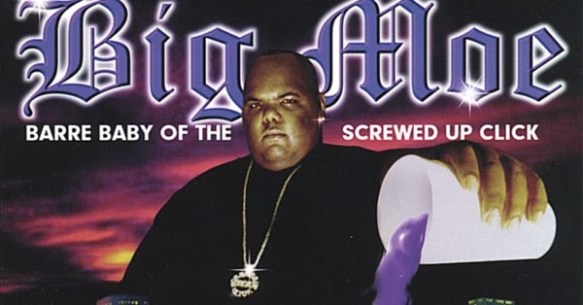
While drugs and music have seemingly been related since the dawn of culture, few drugs are intertwined with a specific culture in the way that ‘lean’ is connected with hip-hop.  From DJ Screw and Big Moe, to Lil’ Wayne and Macklemore, to Justin Bieber and even Miley Cyrus, lean and hip-hop, hand-in-hand, have expanded their influence (Westhoff).  As ABC News put it, “It’s more than a drug; it’s a culture.  It’s what’s known on the street as “Lean,” a highly addictive cocktail of cough syrup, cold medicine, alcohol and candy — so potent it makes you “lean” over when high” (Hughes).  In this essay, I hope to examine the role of lean in hip-hop culture.  First, I’ll specifically discuss lean and its effects.  Then, I will look into the origins of how lean became infused in hip-hop culture, and how both the drug and the culture have become increasingly influential in society.  After that, I will describe some of the efforts to denounce the use of lean in hip-hop culture, before concluding.

“Get introduced to this drink that I sizzip.
Promethazine with codeine that’s my twizzist.”

– Beanie Sigel, “Purple Rain”

Continue reading

Rhetoric of Hip-Hop Blog – Friday, April 25

Blogging assignment, due Friday (April 25), 5pm:

  • Construct a rebuttal that will help you argue your point in your final project. In order to do so you will want to:
  • Identify a legitimate argument your opposition might deliver (not a straw man argument)
  • Decide whether to refute (“you’re wrong because…”) or counter-argue (“you’re right, but… “) it
  • Think about how your rebuttal will work for your ethos (e.g. do you want to be perceived as tough, no-nonsense, as caring and understanding, as someone who will stick to her guns, as someone who strives for compromises that all parties can live with, etc.)
  • In the post, briefly introduce the argument you want to rebut, and then explain how you would go about your rebuttal in your medium of choice in the final project

Writing for Salon, Brittney Cooper denounced the way that Macklemore handled his Grammy wins over Kendrick Lamar. She wrote, “Macklemore on his best day can barely hold a candle to Kendrick on his worse day. Even Macklemore acknowledged that he “robbed Kendrick,” via a text message that he then sent out screenshots of via social media. However, Macklemore claimed that fear prevented him from taking a courageous stance and saying exactly that when he went up to accept his award. But Kendrick Lamar can’t do anything with a private apology, Macklemore. Far too often, allies refuse to speak up in public while asking for absolution via private confessions. Macklemore failed to use the white privilege that he has readily acknowledged to challenge this structure of power in a moment when the world was watching.”

In the article, titled “Macklemore’s useless apology: Grammys and the myth of meritocracy,” Cooper makes very strong arguments about the pervasiveness of white privilege throughout American culture and history, and how Macklemore has benefitted from that.

To be clear, I do agree that Macklemore could have done more to address his privilege. But, especially compared to most other beneficiaries of white privilege, Macklemore has done a lot – although, of course, not enough – to address and raise awareness of race and privilege. He addressed that he “robbed” Kendrick (perhaps not in the most diplomatic way, but still), he’s addressed the gentrification of hip-hop, he’s addressed that The Heist was a great album but probably not deserving of the Grammy.

Yes, Cooper is right, Macklemore could have obviously done more to promote the issue. Yes, if Macklemore would have done more to raise awareness, it would’ve been praiseworthy. But I don’t think that Macklemore should be criticized for not speaking out at the Grammys.

Macklemore made the best album that he could (and it is a great album). He didn’t choose to be white, he didn’t choose to win multiple Grammys, he didn’t choose to “rob” Kendrick. As Talib Kweli said on MSNBC, Macklemore is “an artist who realizes his position in this culture and is doing everything in his power that he can do. He can’t not be white.”

“Test All Things”

Intellectually, it seems the debate over the existence of a higher power remains mostly inconclusive. Sure, there may or may not be some sort of higher power, but it seems to be impossible to know or understand the ‘personality’ of such a being. Most religions, it seems to me, not only claim to know and/or understand the personality of a higher being, but use their beliefs to impose their will on others.

We must, as 1 Thessalonians 5:21 instructs us, “Test all things, and hold firmly that which is good.”

To be clear, I’m a complete supporter for freedom of religion. Religion can make people happier, encourage people to be charitable, provide a sense of meaning and community, and many other positive things. And I largely agree with the brilliant Thomas Jefferson, who wrote in his Notes on the State of Virginia, “It does me no injury for my neighbour to say there are twenty gods, or no god. It neither picks my pocket nor breaks my leg.” But that’s not always the case.

Of course, ‘godless’ societies have committed their fair share of atrocities as well, so atheism might not be the answer either. To clarify, I’m not necessarily opposed to religion; I’m opposed to unjustified certainty. As C.S. Lewis noted in Mere Christianity, “If you look for truth, you may find comfort in the end; if you look for comfort you will not get either comfort or truth.”

Still, religion has historically been used to justify some of the worst actions of humanity (for example, the Bible was widely used to justify the institution of slavery). Even today in the relatively free United States, religious arguments are often used to deny equal rights for certain groups of people, and religion is often used to undermine education in our school system, especially regarding science.

Furthermore, history and common sense reveal to us that people can be ‘good without god.’ Religion protects itself from criticism by claiming the support of god and encouraging ‘faith,’ which inherently discourages learning. By glorifying faith, we glorify what we don’t know; by glorifying learning, on the other hand, we glorify discovering what we don’t know.

“The Great Agnostic” Bob Ingersoll, in an 1877 essay honoring Thomas Paine, wrote, “In all ages reason has been regarded as the enemy of religion.” After all, what is the fate of Socrates if not a display of religion’s tyranny over the mind? Corrupting the youth and impiety – the charges that have led to so much of humanity’s progress. Later in the previously mentioned essay, Ingersoll wrote, “The doubter, the investigator, the Infidel, have been the saviors of liberty.”

In his Rules for Radicals, activist Saul Alinsky noted the importance of irreverence and curiosity, which are complementary. He wrote, “To the questioner nothing is sacred. He detests dogma, defies any finite definition of morality, rebels against any repression of a free, open search for ideas no matter where they may lead … for his irreverence is rooted in a deep reverence for the enigma of life, and an incessant search for its meaning.”

Rhetoric of Hip Hop Blog – Friday, April 11

Blogging assignment, due Friday (April 11), 5pm:

  • Create a sound or video remix of one source related to your controversy. You might:
    • Add background music and sound effects to a speech or interview in order to encourage a certain reading of it
    • Add music to a movie clip to reinterpret it (think McConnelling)
    • Cut up, loop, re-arrange audio or video
    • Put two (or more) audio/video sources in conversation with each other by cutting back and forth between them
    • Distort audio material using reverb, EQ, and filters
    • Distort video material using filters and cropping
    • manipulate the tempo of your audio/video material to create a rhetorical effect
  • Obviously you cannot do all of this at once. Pick one or two techniques that will work for your source and apply them with a clear effect in mind.
  • Upload your project to Youtube and link it on your blog (if you prefer to not make it public, you can upload it to the “Remixes” folder on this wiki)

The Revolution Will Be Analyzed: Breaking Down Gil Scott-Heron’s “The Revolution Will Not Be Televised”

Gil Scott-Heron’s “The Revolution Will Not Be Televised” has been elevated to legendary status over the years. Born out of the Civil Rights movement and the Black Power movement, the spoken-word poem has been sampled, alluded to and referred to by many hip-hop artists, including Kanye West, Queen Latifah, Jay Electronica, Common, Lupe Fiasco and more. In this essay, I will first examine Gil Scott-Heron and his personal history, then analyze “The Revolution Will Not Be Televised” and its historical context, before examining its impact on culture and then concluding.

Gil Scott-Heron was born on April 1, 1949 in Chicago, Illinois. He was raised in Jackson, Tennessee by his maternal grandmother, Lillie Scott (“Singer”). When his grandmother died, he moved to New York, when he was 12 years old (Nosnitsky). He attended high school in The Bronx, endured attending Lincoln University in Pennsylvania, and eventually settled in Manhattan (Tyler)(Scott). During his time at Lincoln University, he met Brian Jackson, with whom he founded the band Black & Blues. Originally, Scott-Heron was one of about nine members in the group, and, according to himself, was “arguably not the most important voice in the group” (Scott). The group eventually broke up by the time that Scott-Heron’s solo career took off, but he worked with Brian Jackson throughout his career. While Gil Scott-Heron was been honored as an excellent writer, singer, poet, satirist, father of four, voice of black radicalism, and even “The Godfather of Rap,” his life was far from perfect (Nosnitsky). He battled addiction to cocaine and other substances and was also HIV positive (“Singer”). Uncut magazine described Scott-Heron as a “doomed junkie” who “slowly killed himself with drugs, spent two lengthy periods in prison, and never quite came to terms with his chaotic childhood” (Mulholland). Scott-Heron referred to his musical combination of percussion, political themes and poetry as “black music or black American music” or “bluesology,” referring to himself as a “bluesician” (“Singer”). Over his career, he co-wrote and produced over a dozen albums with Brian Jackson – a legendary jazz pianist, flautist, arranger, and singer (“Singer”) (MacArthur). Scott-Heron has praised the often-overlooked contributions of Brian Jackson: “We made the poems into songs, and we wanted the music to sound like the words, and Brian’s arrangements very often shaped and molded them. … Sometimes I’d ask him and he’d convey in words what sort of feeling he was trying to bring about with that particular chord, and that helped me get into it” (Scott). In May 2011, Gil Scott-Heron died after lengthy battles with drugs and disease, at the age of 62 (Nichols).

In his writings, poems and music, Gil Scott-Heron discussed issues of love, children and a variety of topics; however, the controversial and politically-charged “The Revolution Will Not Be Televised” received the most attention (MacArthur). Discussing people’s emphasis on “the only political piece” on the album, Gil Scott-Heron was a little disappointed: “When people picked “The Revolution Will Not Be Televised” to decide what kind of artists we were, they overlooked what the hell the whole album said. We didn’t just do one tune and let it stand, we did albums and ideas, and all of those ideas were significant to us at the time we were working on them” (Scott). He lamented to the Houston Press, “The least inventive one on the album was the one that was the most heralded” (MacArthur). While Scott-Heron might have considered “The Revolution” to be one of his “least inventive” songs, it’s undoubtedly his most famous and influential. In New York in 1970, at the age of 21, Gil Scott-Heron first recorded the spoken-word poem for his live debut album Small Talk at 125th and Lenox. On the original version (which is the version that I will focus on), congas and bongo drums accompanied Gil Scott-Heron’s spoken-word poetry. Released on the Flying Dutchman label, “The Revolution Will Not Be Televised” is “in essence, a poetry reading accompanied by conga beats and various percussion instruments” (MacArthur). Later in 1971, Scott-Heron’s early – and best-known – song was rerecorded as a more rhythmic jazz tune with the help of his musical partner Brian Jackson’s flute skills (“The”). That version was included on the Scott-Heron’s debut studio album Pieces of a Man, which was produced by Bob Thiele, who also worked with John Coltrane as well as Beat poets like Jack Kerouac (Scott). Scott-Heron has written that, at the time, “Bob Thiele wanted to create a recorded chronicle of the era. Many changes in our society that took place in the 1970s were credited to the 1960s, and Bob wanted those sounds on wax. These were often albums that had no commercial potential, but that were enormously insightful as slices of an age and invaluable as snapshots of a period that reshaped America first and everywhere else later.” And, undoubtedly, “The Revolution” fits well in that category.

The title, now famous, especially in hip-hop culture, was originally a popular slogan during the Black Power movement in the 1960s and 1970s in America. The song’s lyrics, with dominating social and political themes, connect with the black militant activism that was relatively common at the time (“Singer”).

At the time, the idea that media didn’t just observe society’s politics but shaped them as well was barely examined beyond academia (Nichols). Scott-Heron, on the other hand, passionately critiqued the “disengaged and disengaging character of broadcast news – and the crisis of commercialism” (Nichols). While condemning the media and consumerism isn’t too uncommon in recent hip-hop, it arguably wouldn’t be nearly as common without Scott-Heron’s “The Revolution Will Not Be Televised.” Honored as one of the “Top 20 Political Songs,” “The Revolution Will Not Be Televised” is arguably “more poem than song,” and Ian K. Smith of the New Statesman compared it to Allen Ginsberg’s “Howl” and Bob Dylan’s “Subterranean Homesick Blues” (Smith). Rather than a simple catchy pop song, “The Revolution,” according to Smith,” is “the linear notes of a generation, a relentless stream of cultural references against hand-beaten drums” (Smith). The song aims to denounce “the elusive nature of political culture in Nixon’s America, and the inability of the mainstream to capture the real heart of the people” (Smith). Over the years, the song and its title have been “used, reused, and recontextualized” may times, or, put more bluntly, as Leon Collins, who lived with Gil in the 60s and 70s, put it, “That’s been co-opted and exploited a billion different ways” (Azpiri) (Nosnitsky). Additionally, the song has recently been considered an “anthem for a movement where Americans of all colors and creeds will stand up for their rights” (Burnett). However, the song was originally aimed at black people. With what some have called “militant vibe,” Scott-Heron fearlessly described and denounced the dominating culture. (MacArthur). In his “socially aware signature song,” he “pitted the cultural awakening of the Civil Rights era against American consumerism” in a poem that “took the form of a list of things that Heron hated: banal icons of white culture and loathed political figures that dominated American television in the 1970s” (“The”) (Mulholland). Following the Civil Rights Movement, Gil Scott-Heron, in the words of Lurma Rackley, the mother of Gil’s son Rumal, brilliantly tapped into some of the major events of the time “in a way that people could understand … and he made extraordinary commentary on the major issues of his time” (Nosnitsky).

At face value, some of the lyrics can arguably be interpreted as hostile, especially toward white people (perhaps not too surprising, considering that the song is essentially a denunciation of the dominant white culture of the time). For example, Scott-Heron emphatically says, “The revolution will not be right back after a message / about a white tornado, white lightning, or white people.” Throughout the song, as he does in the previous quote, Scott-Heron does unquestionably critique consumerism’s constant sloganeering, but he does so with humor – humor with a bite (Nosnitsky). Scott-Heron has said previously, “I don’t know if I was as angry as I was misunderstood. I think that a lot of the things we did contained a lot of humor that went over people’s heads. We were clearly coming from a small southern town in Tennessee and we didn’t estimate what effect we’d have on national and international governments. We were trying to represent our community and speak about the things there. If people don’t understand the humor then it’s angry, but if people see the juxtaposition of the ideas then they understand where we’re coming from” (Nosnitsky). As Pitchfork has pointed out, “The Revolution Will Be Televised” is “dripping with sarcasm and subtly deadpanned double speak, even in his most harrowing moments. He also had an obvious love for slapstick verbal puns and could bend language in all different directions almost as a natural tic” (Nosnitsky). Part of what enabled Scott-Heron to so effectively use language for humor and impact was his use of “black English,” which, percussionist Larry McDonald argued, allowed him to “curse and swear and say the most outrageous things, and it didn’t seem obscene because it was totally in context” (Nosnitsky). The way that Scott-Heron twists popular references and allusions is both humorous and insightful. In the original version, after introducing himself and his colleagues, explains with deadpan humor, “We’d like to do a poem for you called ‘The revolution will not be televised,’ primarily because it won’t be.” Not only adding entertainment value, Scott-Heron’s satire allows a subversion to be “buried in the humour” (Smith). As Saul Alinsky wrote in Rules for Radicals, “Ridicule is man’s most potent weapon” – a concept that Scott-Heron seemed to understand and put into action.

The Revolution, according to Gil Scott-Heron, won’t be dictated by the government or by corporations. To make that point clear, he ridicules various government officials: “The revolution will not show you pictures of Nixon / Blowing a bugle and leading a charge by John Mitchell, General Abrams and Spiro Agnew to eat / Hog maws confiscated from a Harlem sanctuary.” Mocking the claims made in advertisements, Gil Scott-Heron notes that the Revolution (unlike Ultra Brite, Schick, and other brands) “will not give your mouth sex appeal / The revolution will not get rid of the nubs / The revolution will not make you look five pounds thinner, because the revolution will not be televised, Brother.” Denouncing popular television shows of the time, Scott-Heron says in the song: “Green Acres, The Beverly Hillbillies, and Hooterville Junction will no longer be so goddamn relevant, and women will not care if Dick finally screwed Jane on Search for Tomorrow because black people will be in the street looking for a brighter day.” Despite the song’s outdated allusions, The New Yorker called it a “classic that sounds as subversive and intelligent now as it did when it was new” (Wilkinson).

Repetition is probably the most obvious and arguably the strongest rhetorical device that Scott-Heron used the most in the poem. Perhaps ironically, in the same way that advertisements constantly emphasize a single slogan, Gil Scott-Heron repeats the song’s title – “The Revolution Will Not Be Televised” – throughout the song. While many of his allusions act as denunciations, that specific line, as Scott-Heron has explained in interviews, captures the song’s message: “You have to change your mind before you change the way you live and the way you move… The thing that’s going to change people is something that no one will ever be able to capture on film. It will just be something you see and all of a sudden you realize, ‘I’m on the wrong page’” (Rap Genius).

In conclusion, “The Revolution Will Not Be Televised” helped Gil Scott-Heron cement his title as “The Godfather of Rap” and the “Inventor of Rap” (The Nation, New Statesman). According to legendary Public Enemy member Chuck D, Scott-Heron laid the groundwork for hip-hop MCs to “do what we do and how we do” (“The”). Scott-Heron’s “unique proto-rap vocal style” over “bare-bones arrangements featuring pounding basslines and stripped-down drumbeats” heavily influenced the culture of hip-hop and “set the stage for rap as a form of sociopolitical expression for the masses” (Azpiri) (MacArthur). Aided by the use of slang, allusions, humor, and repetition, Gil Scott-Heron’s “The Revolution Will Not Be Televised” not only captured the feelings of a specific time in history, but helped forged the future as well.


Works Cited:

Alinsky, Saul David. Rules for Radicals. N.p.: n.p., 1972. Print.

Azpiri, Jon. “Pieces of a Man Review.” AllMusic. N.p., n.d. Web. 25 Mar. 2014. <http://www.allmusic.com/album/pieces-of-a-man-mw0000172002&gt;.

Burnett, Bob. “The Revolution Will Not Be Televised (2014).” The Huffington Post. TheHuffingtonPost.com, 21 Feb. 2014. Web. 25 Mar. 2014. <http://www.huffingtonpost.com/bob-burnett/the-revolution-will-not-be-televised-2014_b_4830672.html&gt;.

MacArthur, Paul J. “Catching Up with Gil.” Houston Press, 03 Sept. 1998. Web. 25 Mar. 2014. <http://www.houstonpress.com/1998-09-03/music/catching-up-with-gil/full/&gt;.

Mulholland, Garry. “Gil Scott-Heron – The Revolution Begins: The Flying Dutchman Masters.” Uncut.co.uk. Uncut, n.d. Web. 25 Mar. 2014. <http://www.uncut.co.uk/gil-scott-heron-the-revolution-begins-the-flying-dutchman-masters-review&gt;.

Nichols, John. “Gil Scott-Heron’s Revolution.” The Nation. N.p., n.d. Web. 25 Mar. 2014. <http://www.thenation.com/blog/161025/gil-scott-herons-revolution&gt;.

Nosnitsky, Andrew. “Gil Scott-Heron: More Than a Revolution.” Pitchfork, 18 Jan. 2012. Web. 25 Mar. 2014. <http://pitchfork.com/features/articles/8755-gil-scott-heron/&gt;.

“The Revolution Will Not Be Televised by Gil Scott-Heron | Song Stories.” Rolling Stone. N.p., n.d. Web. 25 Mar. 2014. <http://www.rollingstone.com/music/song-stories/the-revolution-will-not-be-televised-gil-scott-heron#ixzz2wu4KHI00&gt;

Scott-Heron, Gil. “An Excerpt From “The Last Holiday”” Jazz Articles. JazzTimes, 12 Apr. 2012. Web. 25 Mar. 2014. <http://jazztimes.com/articles/29842-gil-scott-heron-an-excerpt-from-the-last-holiday&gt;.

Scott-Heron, Gil. “”The Revolution Will Not Be Televised”” Poetry Genius. N.p., n.d. Web. 25 Mar. 2014. <http://poetry.rapgenius.com/Gil-scott-heron-the-revolution-will-not-be-televised-annotated&gt;.

“Singer Gil Scott-Heron Dies at 62.” Mail Online. Daily Mail, n.d. Web. 25 Mar. 2014. <http://www.dailymail.co.uk/news/article-1391777/Revolution-Will-Not-Be-Televised-singer-Gil-Scott-Heron-dies-62.html&gt;.

Smith, Ian K. “Top 20 Political Songs: The Revolution Will Not Be Televised | Gil Scott-Heron | 1971.” New Statesman. N.p., n.d. Web. 25 Mar. 2014. <http://www.newstatesman.com/music/2010/03/revolution-televised-gil-scott&gt;.

Tyler-Ameen, Daoud. “Gil Scott-Heron, Poet And Musician, Has Died.” NPR.org. NPR, 27 May 2011. Web. 25 Mar. 2014. <http://ww.npr.org/blogs/therecord/2011/05/27/136731274/gil-scott-heron-poet-and-musician-has-died&gt;.

Wilkinson, Alec. “New York Is Killing Me.” The New Yorker. N.p., n.d. Web. 25 Mar. 2014. <http://www.newyorker.com/reporting/2010/08/09/100809fa_fact_wilkinson?currentPage=all&gt;.


The Art of Rhetoric: Directing the World, One Soul at a Time

Ideas are powerful. But without words, ideas are limited. As Jarod Kintz wrote, “Ideas are like legs: what good are they if you can’t run with them, or spread them?” (The Days of Yay are Here! Wake Me Up When They’re Over).Clearly, words are important. Playing on Rene Descartes, the greatest orators are capable of the greatest vices as well as of the greatest virtues. At its best, rhetoric has been, and can be, used to inform, enlighten, and empower people and spread virtue – for example, Dr. Martin Luther King Jr.’s “I Have a Dream” speech. At its worst, rhetoric has been, and can be, used to mislead, manipulate, and oppress people and spread vice – for example, Adolf Hitler, who noted in his Mein Kampf, “I know that fewer people are won over by the written word than by the spoken word and that every great movement on this earth owes its growth to great speakers and not to great writers.” Because rhetoric is so immensely powerful, it’s important to examine. In this essay, drawing upon some of history’s greatest orators as well as some of Plato’s dialogues, I will examine the art of rhetoric – which I define, as Socrates did, as a way of directing the soul by speech.

In Plato’s Phaedrus, Socrates considers rhetoric to be the true psychagogia, the techne of directing the soul by means of speech (261a). Additionally, Socrates notes, in the form of a question, that rhetoric “leads the soul by means of words, not only in law courts and the various other public assemblages, but in private companies as well” and that it’s “the same when concerned with small things as with great, and, properly speaking, no more to be esteemed in important than in trifling matters” (261a-b). Rhetoric, generally speaking, is merely a tool for expression and, if done effectively, a tool for persuasion – but a tool that’s important in all aspects of life. The rhetorical skills that enabled Dr. Martin Luther King Jr. to inspire countless people to embrace equality also enabled Hitler’s rise to power. Still, those skills are the same skills that enable people to debate over what to have for dinner, to discuss which sports team is the best, and to ponder countless other trivial arguments.

While I agree with many, if not most, of Socrates’ points on rhetoric, I agree with Phaedrus’ view that “one who is to be an orator does not need to know what is really just, but what would seem just to the multitude who are to pass judgment, and not what is really good or noble, but what will seem to be so; for they say that persuasion comes from what seems to be true, not from the truth” (260a). In other words, one could say that the aim of rhetoric is to convince others of something, and not to find the unquestionable truth. In response, Socrates presents a thought experiment. If Socrates praised “the ass, which I called a horse,” as “a most valuable possession at home and in war,” it would be ridiculous – he praised the ass as if it were a horse – which it wasn’t (260). Therefore, according to Socrates, in the same way that it would be ridiculous to praise the ass under the name of a horse, it would be ridiculous (and lead to “no very good harvest”) to praise evil under the name of good (260). Of course, it can be ridiculous and quite possibly dangerous to mislead people through rhetoric. But rhetoric, as Socrates noted, is a way of directing the soul – not necessarily directing the soul in the most virtuous way. If the speaker’s goal is to convince the city to get horses, but his words direct the city to get donkeys instead, he has failed to achieve his goal. However, if the speaker’s goal is to convince the city to get donkeys – even if it’s not the best idea – and his words succeed in directing the city to get donkeys, then the speaker has succeeded in directing the soul in the direction that he intended to direct them – regardless of how wise of a decision it was. Furthermore, even if the speaker’s goal was to deceive his audience – rather than simply trying, in good will, to convince them to get donkeys – I don’t think the speaker has to have completely thorough knowledge of donkeys or completely thorough knowledge of what is right and what is wrong; as long as he can convince his audience that he knows what he’s talking about, it doesn’t matter if he truly knows what he’s talking about or not.

Building upon this point, I reject the Spartan quote stated by Socrates: “There is no genuine art of speaking without a grasp of the truth, and there never will be” (260e). First of all, I think Socrates’ discussion seems to suggest that “the truth” is something that’s clear, something that’s black-and-white. But as Oscar Wilde wrote in The Importance of Being Earnest, “The truth is rarely pure and never simple.” Socrates himself understood that all he really knew is that he knew nothing. And for some things that seem to be nearly universally recognized as the truth, few, if any, rhetorical skills are needed to make that clear. I’ve never heard anyone give a speech making the point that the sky is blue. If one looks at the sky, it’s blue. Formal rhetoric, especially in today’s world, is arguably most commonly seen in matters of politics and/or religion – two of the most complex, diverse, and subjective topics. I have never heard a politician or preacher or anyone else using rhetorical skills to persuade someone that two plus two is four. Politicians, preachers, and most orators that I’ve heard typically discuss controversial topics, unclear topics, complex topics – topics over which the audience needs to be persuaded one way or the other.

With that understood, ‘good’ and ‘bad’ rhetoric should be judged, not by its truth, but by its effectiveness – its ability to persuade others. Furthermore, on many topics, it’s impossible to accurately judge the ‘truth’ of something in the first place. Religious leaders, throughout history, often make (generally speaking) some of the best speakers. But considering that faith, by its very nature, often deals with topics that are impossible to definitively prove, it would be impossible, as well as unnecessary, to claim that the “genuine art of speaking” requires “a grasp of the truth.” Additionally, often even when the truth is relatively clear, the truth is limited without rhetorical skills to spread the truth. Is it true that God created the world in seven days, as some Christians believe? Most scientists would agree that that’s extremely unlikely, if not blatantly false. Popular opinion is also divided on other issues on which scientists are in almost universal agreement, such as climate change and evolution. While many parts of the Bible are debatable, such as the idea of a literal seven-day creation, it’s indubitable that the Bible, with the help of orators preaching from it, has been one of the most influential works of all time. To be clear, I agree with Socrates that rhetoric without truth often leads to bad results. While it’s better than having rhetorical skills without truth, having the truth without rhetorical skills lacks power. Especially with global issues such as climate change, it’s not enough for most scientists to understand the truth – scientists alone cannot use that knowledge to solve the problems associated with it. In order to most effectively utilize the truth, the truth first needs to be spread – which requires rhetorical skills.

So what’s most important for successful rhetoric? While I disagree with Socrates about the importance of truth in rhetoric, I do agree with his argument that an effective rhetorician “must know the various forms of soul” (271d). I don’t think that the importance of understanding one’s audience can be overstated. For example, I think most people, especially in today’s world, would agree that Hitler was arguably as evil as a human being could possibly be. And many of the ideas that he preached and promoted and enforced were not the truth. But if anything, Hitler’s extraordinary rise to power was far more dependent upon effective rhetoric than truthful rhetoric.

In Phaedrus, as I’ve noted, Socrates seems to advocate a different view of rhetoric than what I’ve proposed. However, Socrates’ discussion of rhetoric in Plato’s Gorgias aligns more closely with my point of view. Socrates argues that, “for the orator and his rhetoric: there is no need to know the truth of actual matters, but one merely needs to have discovered some device of persuasion which will make one appear to those who do not know to know better than those who know” (459b-c). As Socrates also argued in Gorgias, rhetoric relies largely upon presentation, rather than substance. To be clear, for some people, rhetoric can undoubtedly be a “noble” endeavor “to make the citizens’ souls as good as possible, and the persistent effort to say what is best, whether it prove more or less pleasant to one’s hearers”; still, for others, rhetoric is nothing more than “flattery and a base mob-oratory” (502-503a).

In conclusion, rhetoric – the art of directing the soul by means of speech – can be used for both good and bad purposes. The view of rhetoric that I’ve presented allows us to understand the dual nature of rhetoric. Thus, we can recognize that it’s simply not enough to find the truth; we must actively and effectively spread the truth, as Dr. Martin Luther King Jr. did. If we refuse to grasp the art of rhetoric, our ability to spread the truth will be outmatched by the people who have grasped the art of rhetoric, without grasping the truth – like Adolf Hitler. It’s important to understand the truth, as the truth will set us free. But unless we understand the art of rhetoric, we can’t effectively set the truth free.

Rhetoric of Hip Hop Blog – Friday April 4, 2014

Blogging assignment, due Friday (April 4), 5pm:

  • Visual remediation of an argument from your controversy. This is going to be a challenging exercise, so give yourself some time by getting started early.
  • Find an argument from within your controversy and re-imagine it as a still image.
  • Feel free to use materials found online and/or to take your own photographs and/or drawings to incorporate into the remediation
  • You will want to think about condensing a written argument that progresses in a linear way into a single image
  • Things to consider: color, arrangement, proportions, perspective

mac

What does the Bible say about slavery?

Today, the institution of slavery is almost universally rejected. However, that wasn’t the case for most of Christianity’s history, or for most of civilization’s history either. The discussion of slavery in the Bible, often cited as the moral authority for Christians, is often controversial for many Christians today, especially since both slavery advocates and slavery opponents have used the book to support their opinions. In this essay, I will discuss the relationship between slavery and the Bible by first examining the Old Testament, then the New Testament, then reactions to the Biblical mentions of slavery, before concluding.

To put it briefly, T. David Curp, a history professor at Ohio University, wrote, “Slavery is regulated in the Old Testament, but there’s no sense therein that God disapproves of the institution per se.”

The Old Testament provides multiple Mosaic laws regulating Hebrews owning other Hebrews – but, to be clear, it in no way seems to have an issue with slavery in and of itself. For example, Exodus 21 lays out rather specific rules for buying “a male Hebrew slave” and how to treat them. While male Hebrew slaves can “go out a free person, without debt” after serving for six years, when a daughter is sold into slavery, “she shall not go out as the male slaves do” (Exodus 21:7).

However, not all mentions of slavery in the Old Testament are in complete agreement; Deuteronomy 15:12, for example, says, “If a member of your community, whether a Hebrew man or a Hebrew woman, is sold to you and works for you six years, in the seventh year you shall set that person free.” So while this verse advocates treating a Hebrew woman similarly to a Hebrew man (in contrast to the distinctions in Exodus 21), it’s still okay with the institution itself.

Although the Hebrew Bible promotes preferred treatment for fellow Israelite slaves, foreigners were not granted the same protections. In Leviticus 25, after advocating against treating “any of your fellow Israelites … with harshness,” Leviticus 25:44 clarifies that “it is from the nations around you that you may acquire male and female slaves” and even treat them “as property” that your children can inherit.

Throughout the Old Testament, slavery seems to be acceptable to God, since slaveholders like Abraham and others (whom God seemed to bless) were never condemned for having slaves. The Old Testament, it seems, does advocate certain protections for Hebrew/Israelite slaves, but has no problem with foreign slaves, or slavery as a system in and of itself.

For some Christians, the Old Testament lacks the authority of the New Testament, because the life of Jesus and the rise of Christianity were different in many ways from the teachings of the Old Testament. Unfortunately for abolitionists, the New Testament was a particularly thorny place.

Since the Old Testament is pretty clear regarding slavery, it should be noted that Jesus, according to Matthew 5:17, said, “Do not think that I have come to abolish the Law or the Prophets; I have not come to abolish them but to fulfill them.” Some could interpret the claim that Jesus didn’t “come to abolish the Law” as an implicit acceptance of the Mosaic Laws, including those regarding slavery.

To be clear, similarly to the Old Testament, “The New Testament, too, is without anything like a formal condemnation,” according to Professor Curp.

Specifically related to slavery, Jesus (according to Luke 7:1-10 as well as Matthew 8:5-13) recognized, applauded, and helped a Roman soldier who was also a slave owner. Far from denouncing the man for owning slaves, Jesus highly praised the soldier’s faith. Far from encouraging the soldier to free his slaves, Jesus rewarded the soldier’s faith by healing the soldier’s slave.

Similarly, in Luke 12:47-48, Jesus seems to be completely fine with a master beating a slave, even if the slave isn’t aware of what he did wrong: “That slave who knew what his master wanted, but did not prepare himself or do what was wanted, will receive a severe beating. But the one who did not know and did what deserved a beating will receive a light beating.”

While Jesus said very little regarding slavery, Paul discusses the institution in various letters, and at times with significant clarity. The Epistle to Philemon in the New Testament, in particular, is considered Paul’s most extensive discussion of slavery. Paul’s letter is written to Philemon regarding his runaway slave, Onesimus. While Paul send Onesimus back to his master Philemon, he seems to at least encourage Philemon to treat Onesimus, not as a slave, but as a brother in Christ. It could even be argued that Paul implicitly urges (but does not force) Philemon to “do even more than I say,” which arguably means freeing Onesimus (Philemon 1:21). However, while Paul seems to encourage freeing Onesimus, a Christian slave, he clearly doesn’t explicitly reject the institution of slavery as a whole.

In addition to Philemon, Paul seems to accept slavery in multiple other letters. For example, Ephesians 6:5 states, “Slaves, obey your earthly masters with fear and trembling, in singleness of heart, as you obey Christ.” In Colossians 3:22, a similar statement is made.  Additionally, slaves are told to be content with their current position as slaves (1 Corinthians 7:21), and “accept the authority of your masters” even if they “are harsh” (1 Peter 2:18-21).

Arguably the clearest discussion of slavery in the Bible is 1 Timothy 6:1-5. In 1 Timothy 6:1, slaves are encouraged to “regard their masters as worthy of all honor, so that the name of God and the teaching may not be blasphemed.” While that statement itself isn’t especially unique within the New Testament, it seems to hold more weight since it’s immediately followed by 1 Timothy 6:3-4, which claims that “Whoever teaches otherwise and does not agree with the sound words of our Lord Jesus Christ and the teaching that is in accordance with godliness, is conceited, understanding nothing, and has morbid craving for controversy and for disputes about words.” So while the statement that slaves should obey their masters (even non-Christian masters) appears in other places, 1 Timothy 6 follows the statement by unquestionably claiming that anyone who teaches otherwise is wrong. Essentially, it would appear, according to 1 Timothy, that if one opposes the idea of a slave obeying his master, they are essentially opposed to God.

After reviewing what the Old and New Testaments say about slavery, it would seem, as Vaughn Roste of the United Church of Canada put it, “If we apply sola scriptura to slavery, I’m afraid the abolitionists are on relatively weak ground. Nowhere is slavery in the Bible lambasted as an oppressive and evil institution.”

However, it should be noted that, according to Greg Carey, a professor of New Testament at Lancaster Theological Seminary, “Without exception, biblical societies were slaveholding societies. The Bible engages remarkably diverse cultures — Ethiopian, Egyptian, Canaanite, Assyrian, Babylonian, Persian, Greek, and Roman — but in every one of them some people owned the rights to others.” So, although the Bible lacks any clear condemnation of slavery, almost no one during Biblical times rejected slavery as an institution.

Additionally, Carey notes that if Christians openly and actively rejected slavery, it would be extremely problematic for their movement: “[I]dentifying Christianity with slave revolt in the Roman Empire would have been the fast track to corporate suicide.”

It should also be noted that, although the Bible doesn’t reject slavery as a whole, it did promote the radical idea of a spiritual equality. For example, Galatians 3:28 reads, “There is no longer Jew or Greek, there is no longer slave or free, there is no longer male and female; for all of you are one in Christ Jesus.”

As many proslavery authors noted, the verse didn’t literally advocate abolishing slavery, since writing that “there is no longer male and female” didn’t change the fact that the genders were still expected to be treated differently; women were still expected to obey their husbands. Still, for most cultures at the time, slavery was not only a socioeconomic condition, but “a state of absolute spiritual inferiority,” according to Curp.

So while the Bible didn’t free the slaves, it did benefit slaves in some ways, such as Onesimus, who, despite being a slave, was to be treated as a brother in Christ by his master Philemon.

On a larger scale, the abolition movement in the 19th century, led and supported by many Christians, radically changed the way that many people read the Bible. Since the specific texts of the Bible seem to accept slavery, many Christians took a more holistic approach to the Bible that promoted a “Christian ideal” over specific rules. For example, while the Bible seems to accept slavery, Jesus’ message in Matthew 22:39, “love your neighbor as yourself,” could override other verses that accept the institution of slavery, because in order to treat others like we would like to be treated, we wouldn’t enslave them.

In conclusion, although it does suggest treating slaves with kindness and care, the Bible – both the Old and New Testaments – never seems to explicitly reject slavery as an institution.